

Environmental Policy
NICHIDEN Corporation is an industrial distributor that specializes in mechanical parts and systems. In consideration of our users’ needs, we fuse our expertise with cutting-edge technologies to create production facilities and systems that have no adverse effects on local communities or the global environment. Also, together with our group companies, we endeavor to operate in an environmentally conscious manner and engage in the following ongoing environmental conservation and improvement activities in order to realize a better global environment and harmonious coexistence with society.
Nichiden Group Environmental Policy
1. Climate Change
We will reduce energy consumption in our business activities and throughout the supply chain, thereby reducing carbon dioxide emissions. We will also promote the expanded sales of products that contribute to the reduction of carbon dioxide emissions and contribute to reducing environmental impact across society through the supply chain.
2. Biodiversity
We will give due consideration to protecting ecosystems in areas surrounding our business activities and work to conserve biodiversity through community contribution activities.
3. Chemicals and Hazardous Substances
We will work to prevent environmental pollution from chemicals and oils and to mitigate their impact, as well as reduce hazardous waste emissions and ensure their proper treatment.
4. Conservation and Effective Use of Water Resources
We will work to reduce water usage through efficient use and recycling, and ensure appropriate water treatment.
5. Promotion of Resource Circulation
We will promote the sustainable use of resources within the supply chain, including fossil fuels and minerals, reduce resource consumption, and reduce and recycle waste emissions, thereby contributing to the realization of a circular economy.
6. Compliance with Laws and Regulations
We will comply with international declarations, agreements, and treaties related to environmental conservation, as well as the laws and regulations of the countries and regions in which we operate, and other matters agreed upon by the company.
7. Environmental Management System
To achieve our Environmental Policy, we will set environmental objectives and targets, review them periodically, and proactively promote environmental improvement. We have established the Environmental Management Committee, which is headed by the Representative Director and President Executive Officer as Chief Executive Officer. With this committee, we will provide education and training so that all employees of the company and its Group companies understand and act in accordance with the Environmental Policy.
8. Information Disclosure and Communication
We will strive to proactively disclose environmental information and promote communication with society.
April 2025
Toshikazu Fuke
Representative Director and President Executive Officer
NICHIDEN Corporation
TCFD Disclosure
(Climate Change Initiatives)
1. Governance and Risk Management
Nichiden Group has always followed its management philosophy to collaborate with stakeholders in solving a variety of social issues towards the growth and progress of a sustainable society. In recent years, the importance of achieving both the realization of a sustainable society through the resolution of such social issues and the continuous enhancement of corporate value has increased further. To strengthen our governance structure related to sustainability, we have established a Sustainability Committee, chaired by the Representative Director and President Executive Officer, with the aim of building a cross-functional and agile promotion framework.
The Sustainability Committee formulates basic policies related to sustainability, sets targets for addressing key social issues, manages and evaluates progress toward those targets, and deliberates on individual measures. The Committee reports and makes recommendations to the Board of Directors twice a year.
In addition, we formulate policies to promote sustainability across the Group and coordinate and align efforts within the Group.
2. Strategy
■ Risk
| Risk category | Factor | Period | Risk | Response | |
|---|---|---|---|---|---|
| Transition risks | Policy and regulatory risks | Introduction of carbon tax and CO2 emissions regulations | Medium to long term | Increase in tax burden due to carbon tax and CO2 emissions regulations, as well as rising procurement costs and electricity expenses | · Promotion of CO2 emissions reduction measures both internally and externally |
| Technological risks | Further advancement of CO2 emissions reduction technologies | Medium to long term | Loss of business opportunities due to delays in responses such as adopting new CO2 emissions reduction technologies | · Development and sales expansion of innovative CO2 emissions reduction technology products · Sales and technological collaboration through alliances with companies related to CO2 emissions reduction technologies |
|
| Market risks | Changes in product markets | Short to long term |
Decline in handling of key products and mismatch with market forecasts Delays in developing new product lines and new supplier relationships |
· Further expansion of solution-based businesses · Increase in new product offerings through strengthened marketing |
|
| Reputational risks | Supporting a decarbonized society | Short to long term |
Decline in revenue due to loss of trust from stakeholders | · Enhancement of product lineup contributing to CO2 emissions reduction through collaboration with sustainability-focused suppliers · Enhancement of climate change disclosures |
|
| Physical risks | Acute risks | Occurrence of major disasters | Short to long term |
Suspension of order processing, logistics functions, and systems Suspension of order processing and logistics functions due to supply chain disruptions |
· Securing the supply chain through BCP development and strengthened business continuity management (BCM) initiatives |
| Chronic risks | Chronic rise in temperatures | Short to long term |
Water shortages and rising product storage costs Increased complexity in product management |
· Enhancement of climate-resilient product offerings and establishment of quality maintenance systems | |
■ Opportunities
| Risk category | Factor | Period | Risk | Response | |
|---|---|---|---|---|---|
| Transition risks | Policy and regulatory risks | Introduction of carbon tax and CO2 emissions regulations | Medium to long term | Responding to capital investment needs for labor-saving equipment at manufacturers’ factories Consolidation of sales channels for manufacturers and others |
· Promotion of CO2 emissions reduction measures internally · Expansion of products contributing to CO2 emissions reduction |
| Technological risks | Further advancement of CO2 emissions reduction technologies | Medium to long term | Development of new business areas and increased sales opportunities for CO2 emissions reduction products | · Expansion of CO2 emissions reduction products through connections with new users and suppliers | |
| Market risks | Changes in product markets | Short to long term |
Response to solution-based businesses addressing user challenges and development of new markets Differentiation from competitors through enhancement of sales systems |
· Strengthened marketing to address users’ CO2 emissions challenges and expansion of related product offerings | |
| Reputational risks | Supporting a decarbonized society | Short to long term |
Increase in product lineup contributing to CO2 emissions reduction | · Expansion of collaboration with suppliers proactively engaged in CO2 emissions reduction products · Contribution to society through sales of CO2 emissions reduction products to sustainability-oriented users |
|
| Transition risks | Acute risks | Occurrence of major disasters | Short to long term |
Securing the supply chain through BCP initiatives | · Strengthening internal systems and supply chain management through BCP initiatives |
| Chronic risks | Chronic rise in temperatures | Short to long term |
Expansion of logistics functions leveraging accumulated expertise Strengthening response to customer needs |
· Enhancement of climate-resilient product offerings and establishment of quality maintenance systems | |
The following assumptions have been made regarding the financial impact on the company from the future introduction of a carbon tax.
Fiscal 2030: Approximately 30 million yen (calculated using the exchange rate at the fiscal year end)
Calculated at 140 USD per t-CO2 based on the NZE scenario in the IEA World Energy Outlook 2023. The estimate is based on the Scope 1 and Scope 2 emissions targets for fiscal 2030 and assumes that all of the company’s Scope 1 and Scope 2 emissions are subject to taxation.
3. Indicators and Targets
The Group monitors CO2 emissions (Scope 1 and Scope 2) as climate change-related indicators and has established reduction targets. Results and targets are as follows.
■ Scope 1 and Scope 2 Emissions Performance (Non-consolidated, Unit: t-CO2)
| Indicator | Base year (fiscal 2022) | Fiscal 2024 | Fiscal 2025 |
|---|---|---|---|
| Scope 1 | 624 | 572 | 565 |
| Scope 2 | 1,331 | 1,715 | 863 |
| Total | 1,955 | 2,287 | 1,418 |
■ Scope 1 and Scope 2 Reduction Targets (Non-consolidated, Unit: t-CO2)
| Fiscal 2030 | Fiscal 2050 | |
|---|---|---|
| Reduction target | 30% reduction compared with fiscal 2022 results | Effectively carbon neutral |
As no targets have been set for consolidated subsidiaries with respect to these indicators, we disclose the company’s actual results and targets.
In the current fiscal year, in addition to the company’s emissions (Scope 1 and Scope 2), we calculated and identified upstream supply chain emissions (Scope 3). Going forward, we will work to improve the accuracy of Scope 3 calculations and, with respect to other Scope 3 categories, will examine and discuss the calculable scope based on the characteristics of our business. We will also consider setting reduction targets for Scope 3.
■ Scope 3 Emissions Performance (Non-consolidated, Unit: t-CO2)
| Indicator | Results for fiscal 2024 | Results for fiscal 2025 | |
|---|---|---|---|
| Scope 3 | Category 1: Purchased goods and services | 477,763 | 498,992 |
| Scope 3 | Category 2: Capital goods | 1,809 | 4,327 |
| Scope 3 | Category 3: Fuel- and energy-related activities not included in Scope 1 or Scope 2 | 408 | 271 |
| Scope 3 | Category 4: Transportation and distribution | 3,431 | 3,572 |
| Scope 3 | Category 5: Waste generated in operations | 57 | 115 |
| Scope 3 | Category 6: Business travel | 235 | 304 |
| Scope 3 | Category 7: Employee commuting | 595 | 482 |
| Total | 484,298 | 508,063 | |
For actual figures, we disclose the company’s results.
Category 8: Leased assets are not applicable and are therefore excluded from calculation.
ISO 14001
Environmental Policy with a Focus on ISO 14001
NICHIDEN Corporation is an industrial distributor that specializes in mechanical parts and systems. In consideration of our users’ needs, we fuse our expertise with cutting-edge technologies to create production facilities and systems that have no adverse effects on local communities or the global environment. We also pursue environmentally friendly management.
- We abide by all environmental laws, regulations, ordinances, and agreements.
- We set, implement, and maintain environmental objectives and targets. We regularly review them as needed.
- We work to reduce the consumption of resources and energy across all business activities.
- We reduce waste through proper disposal and recycling and make effective use of resources.
- We take active steps to sell more environmentally friendly products.
- We instill our environmental policy, objectives, and targets throughout the company. We provide education and training so that everyone in the Nichiden organization understands the policy, objectives, and targets and acts accordingly.
Implementation Systems
We are ISO 14001-certified and strive to constantly improve by reducing and avoiding risks and by cutting costs through energy and resource efficiency.
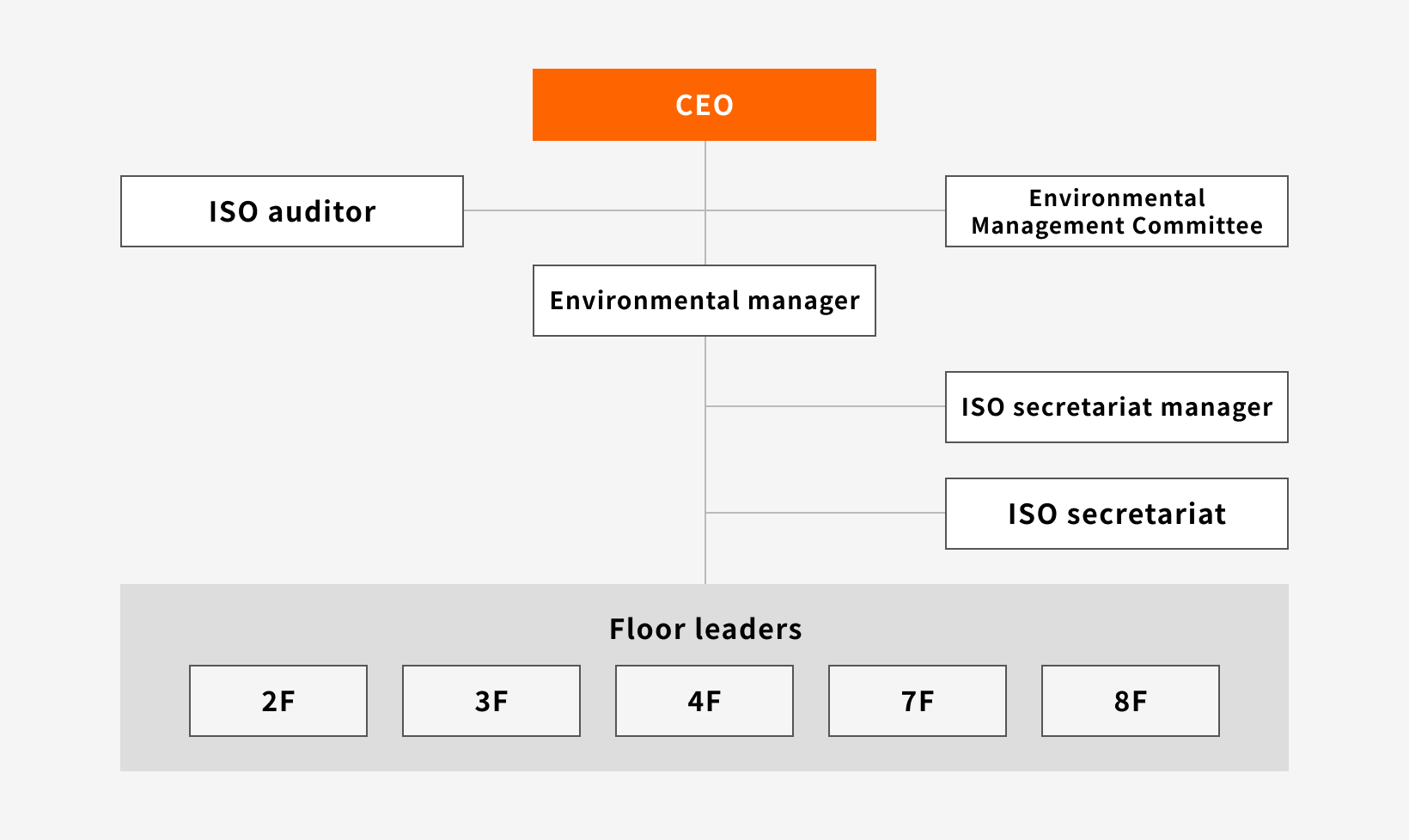
We have in place systems to improve our environmental performance. These include the Environmental Management Committee, which is headed by the president, and the appointment of an environmental manager and floor leaders on each floor of our head office.
In order to understand the effects our activities have on the environment and society and thus prevent risks before they occur, we have built an environmental management system with mechanisms to assess the impact of current products and future investments on the environment. As well, every year we set environmental risk reduction targets, and targets for environmental businesses, energy and resource efficiency, and greenhouse gas emission reductions. We also implement a PDCA cycle so that we can continuously improve through company-wide reviews and audits of targeted activities.
■ Environmental Improvement Promotion System
Nichiden’s environmental slogan is “Working towards a future-friendly environment.” We actively strive to protect and live in harmony with the environment, so that it can be preserved for future generations.
SDG Initiatives
Under our management philosophy and company vision, we reviewed our corporate activities so far from an SDGs perspective. We then identified two areas of focus: areas in which we contribute through business, and in-house matters that support our business.
Based on our belief that market needs mean solving society’s most pressing problems, we conduct business while actively striving to achieve the SDGs.
Nichiden’s Two Areas of Focus
Areas in which we contribute through business
- Problem solving and solutions
- Environmental contribution
- Human resource development and utilization
In-house matters that support our business
- Environmental contribution
- Securing and developing human resources
- Working environment
- Compliance


Our Vision
“Grow continuously and boost corporate value”
and “Contribute to a sustainable society”
Nichiden’s SDGs Declaration
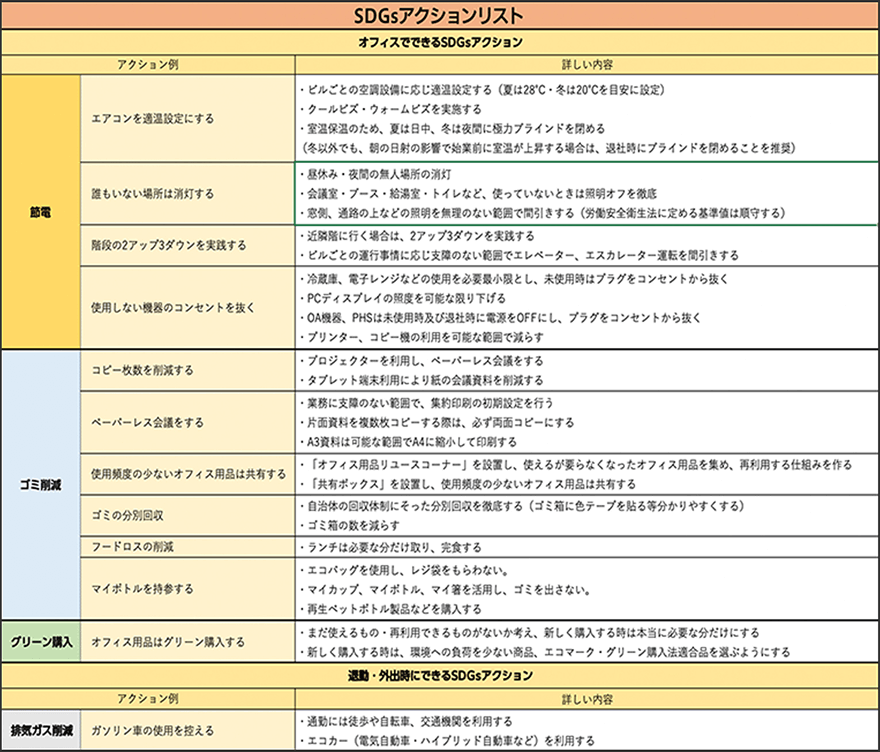
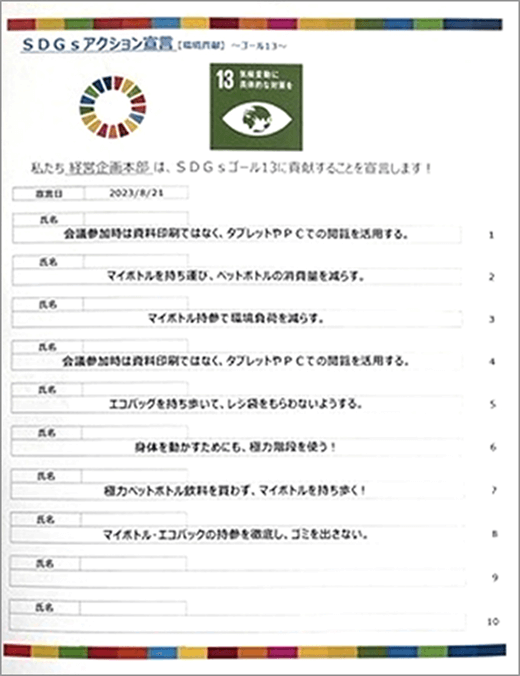
To more deeply integrate initiatives, starting in fiscal 2023 each and every employee, including members of the board of directors, promises to take action towards the SDGs. Our SDGs declaration is posted in every workplace, and employees have a shared awareness to continuously put it into action. We will continue to contribute to a sustainable society through this and other activities.
Environmental Contribution
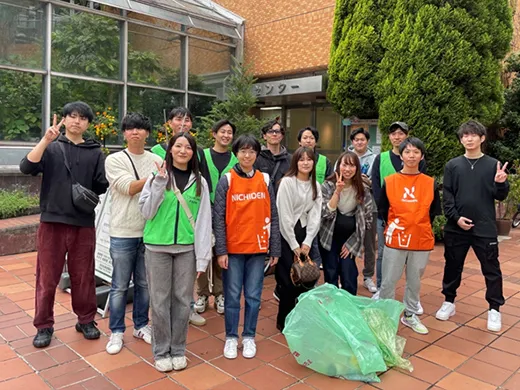
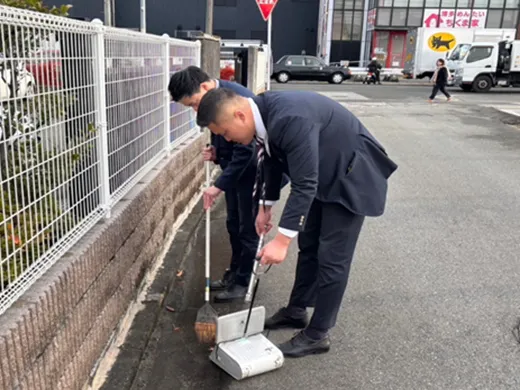
As part of our efforts to protect the environment, Nichiden holds cleanups of public spaces and areas around our offices. In these activities, we value communication with local residents as we strive to maintain beautiful environments.
Tenjin Festival Zero Waste Operation Activities
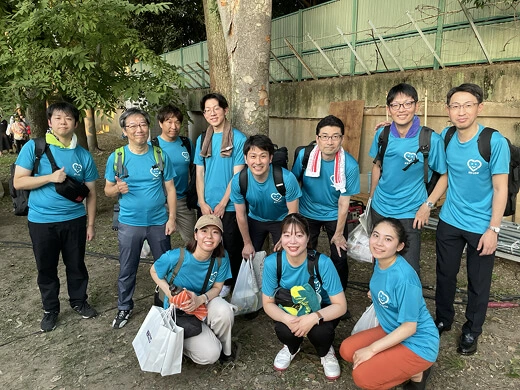
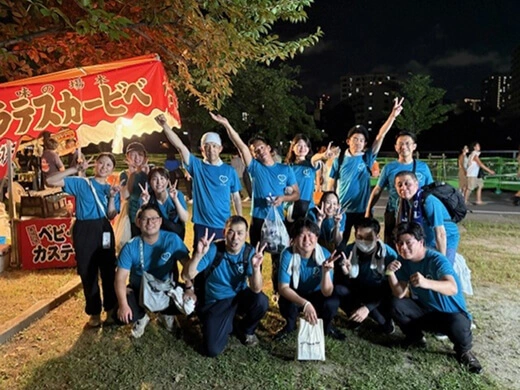
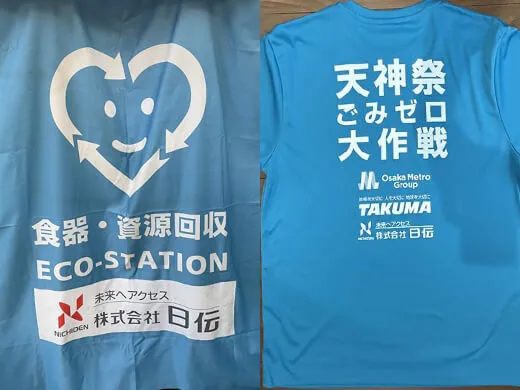
A total of 27 people participated in the volunteer “Tenjin Festival Zero Garbage Campaign” held at the Tenjin Festival from July 24th (Thursday) to July 25th (Friday), 2025. At the Eco Station, we encouraged participants to separate and collect their trash and cleaned up scattered trash within the venue.
We have participated in this event for three consecutive years, and this year our company joined as a sponsoring company, with our logo displayed on the T-shirts worn by volunteer staff and at the Eco Station.
Working together with colleagues during the activities provided a valuable opportunity to reconsider our awareness of the environment.
Clean Active Nichiden
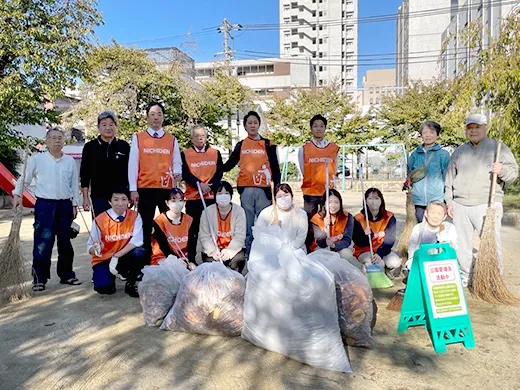
Each office conducts cleanup activities around its premises and in public spaces under the “Clean Active Nichiden” initiative. Through these activities, we learn about the social environment and enhance environmental awareness.
Reusing Resources
To contribute to society by helping achieve a circular economy, we treat waste as a recyclable resource whenever possible and properly dispose of waste.
Environmental Education
To provide our employees with environmental knowledge that helps them propel Nichiden’s eco-friendly initiatives, once a year, we offer ISO 14001 classroom training at the head office. In addition, eco-driving content is included in safe driving seminars for all employees, fostering greater environmental awareness in their daily work activities.